

About Our Founder
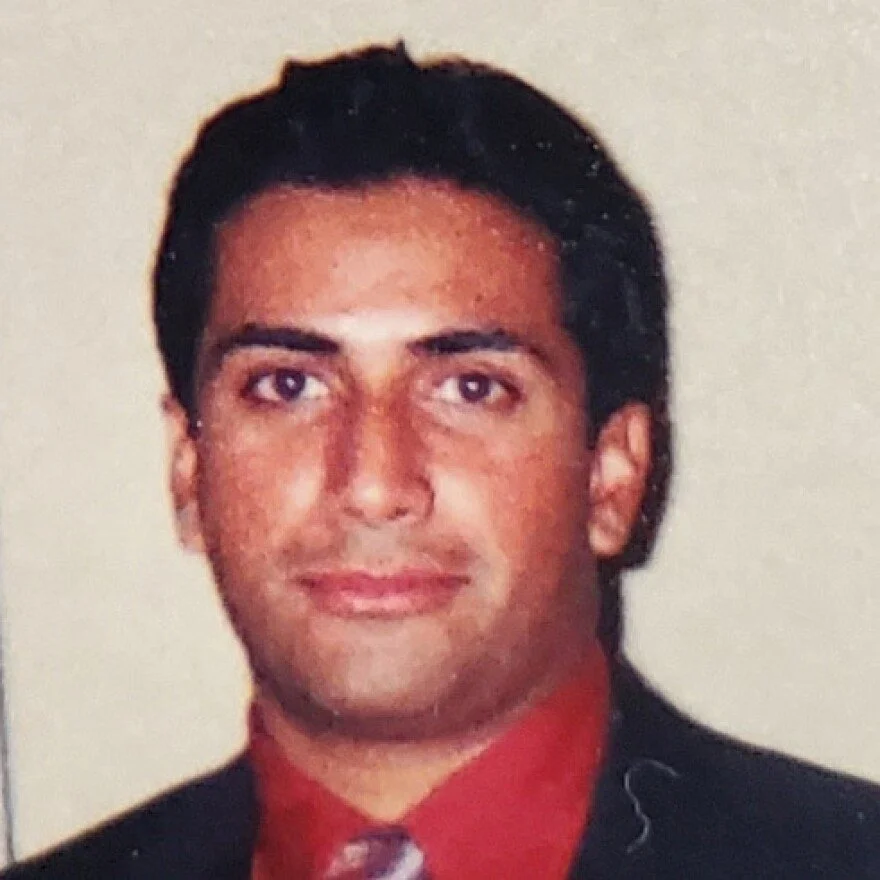
Tariq MaQbool’s Interview with Prison Journalism Project (2020)
Q: Who are you? Tell us a little about your background and what you’d like readers to know about you.
My name is Tariq. I am 43 and I was born in Lahore, Pakistan. I come from a respected family with a rich history. I belong to the famed Sumra tribes of the Salt Range Mountains in Pakistan’s North. You can Google the “Rohtas Fort” if you are into history. I attended the elite Garrison Schools in Pakistan. My mother brought us to the United States over my vehement protests because she was opposed to my aspiring military career, in line with our family’s longtime tradition. I finished high school in Long Island, NY, and went to college in New York City. Now, I’m one of the approximately 2.3 million Americans that are incarcerated in the United States. I am just a statistic really. The only difference is that I’m not some digit on dry pages. I talk back!
Q: When did you start expressing yourself through writing? Tell us about your origins as a writer.
I started writing very early on in my childhood in Pakistan. It was mostly Urdu poetry. Both of my parents were university professors. My literary interests were encouraged and honed by my aunt Naseem. She was a renowned educator, a fixture on Pakistan Radio and television. She was my aunt, teacher, mentor, friend, and confidante. She introduced me to the love of reading, learning, and exploring and seeing the world from different angles. I became a vociferous reader and till this day my family members would tell others about my ‘craze’ of reading. To tell you the truth, I actually never left that whimsical world she introduced me to. It also, ultimately, proved to be an elixir for my survival in this dark place. I would often write poems and share it with my aunt. She encouraged my probes. But I didn’t share any of my writings with anyone else because it was something I did uniquely for myself. Later on in prison, my friend Shaheen, an educator herself, advised and insisted that I should write during our many phone conversations. After most of my appeals were denied, I finally took her advice. I liked reading Stephen King who said, “Get busy living or get busy dying.” So, I got busy and asked my brother to create a forum for me to muse on and that resulted in our website. Thus, my journey began.
Q: What kinds of stories are you most interested in telling? What genres do you prefer?
I would like to tell life stories of real people who are suffering from the injustice of the worst criminal justice system in the world. I call the American judicial system the worst because it’s professed to be the best. I want to expose that farce and perhaps help those who are behind bars. I love fiction and fantasy, the latter more than the former. Knowing the darkness of life personally, I prefer the fantasy realms. Think about it: a rainy day, a hot cup of pomegranate tea, a tome filled with elves, wizards, and goblins. Let me traverse the Middle Earth, travel beyond the Wall, and sail from Westeros to the shores beyond. Let me explore the galaxy and wonders beyond imagination. I would be a happy man indeed.
Q: Where do you find the inspiration, or the ideas, for your writing?
I find inspiration in things that touch my heart. Sometimes I see things that trigger a memory. For example, I saw a placard in a window outside the prison walls and I wrote “Casper.” I noticed a statue of Mary on a church next to the prison complex and that juxtaposition resulted in “The Big Yard.” So, basically, I write from my heart, not my brain. I don’t know if that makes sense to you but I can’t manufacture. When I write, it has to come naturally, I cannot write without inner inspiration. When it comes, it flows.
Q: Why do you think writing is important for incarcerated men and women? Why should people on the outside read your stories?
Because it is cathartic. Folks outside don’t know this but the majority of my incarcerated brothers and sisters hardly ever actually get to say anything. Lawyers, prosecutors, police, and judges do the talking and we end up in here without any input. Once in prison, even our voices are confined. So, writing provides an avenue for an incarcerated person to speak his or her truth. My advice is always to write: “Don’t go gently into that dark night … rage!” People on the outside should read our stories if they have a heart and mind. If, however, they are robots, then there is no need. So, if someone is interested in forming an opinion about our societal issues with racism, equality, and justice, then it behooves them to hear BOTH sides of the story.
Q: How would you like to be remembered and thought of as a person?
I am a Pakistani American. Pakistanis are resilient and brave by nature. So, that will suffice for me. I don’t want to be someone who gave up; that is not in my nature. I’m Muslim and my perspective is driven by my faith. To paraphrase a saying of our Prophet, “If you see an evil then fix it with your hand; If you are unable to do that then speak against it; if you are not able to do that either then hate it in your heart, and know that it is the weakest of faith!” So, I’m fighting and raging against this evil system. I refuse to be defined by others. I shall tell my own story. I am using my voice to bring focus to our plight. I pray that it makes a difference. I hope that my efforts will lead me home to my family. If not, then perhaps it might help another Tariq in the future. Thank you for your help to amplify my voice and message. May God Bless you all.
Tariq MaQbool was born in Lahore, Pakistan to a respected family with a rich history. Belonging to the famed Sumra tribes of the Salt Range Mountains in Pakistan’s North, he attended the elite Garrison Schools. Tariq originally aspired to be a military officer, following a long-standing family tradition. However, the MaQbools immigrated to the United States, where Tariq finished high school in Long Island, NY, before going on to college in New York City.
“As a Pakistani American, I had figured that I understood racism,” he writes. “(But) watching that police officer, Chauvin, pin his knee deeper into George Floyd’s neck with his hands in his pockets, opened my eyes to the fact that I didn’t have the slightest clue about discrimination, prejudice and real racism… it became abundantly clear that I just needed to be quiet.”
Being quiet, so others who are often silenced can speak is also what drives us at Prison Journalism Project.
Thanks to the initiatives of giving clemency to long-term prisoners set by former Governor of New Jersey Phil Murphy, Tariq is set to be eligible for parole in 2032, and a five year supervision period afterwards. He is currently being held in East Jersey State Prison.
Tariq MaQbool before his incarceration, 2000
This website was built by Eddy MaQbool, Tariq’s brother, and maintained by Sehrish Khan, Tariq’s niece. We sincerely thank you for your support!